Elementary Certificate
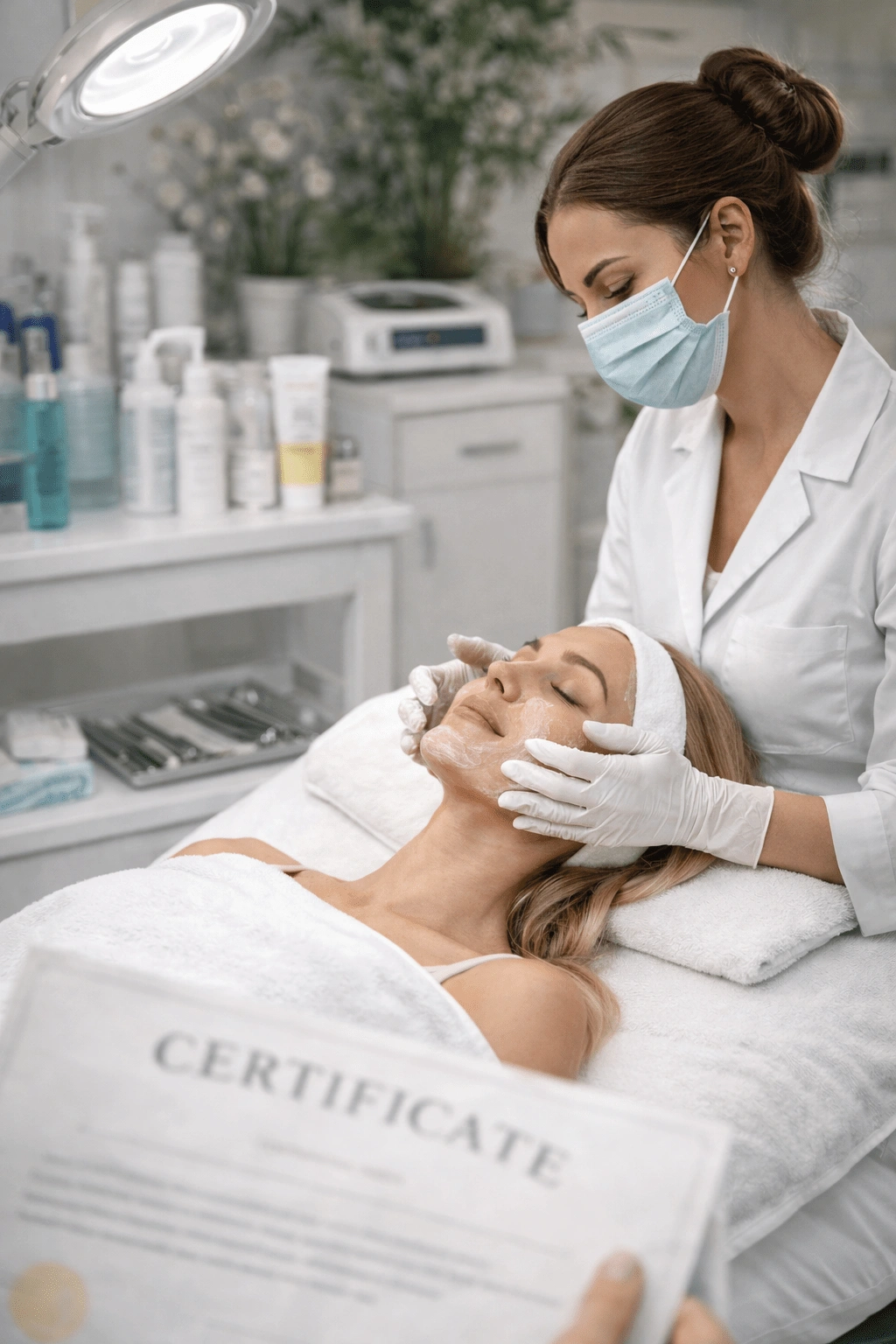
The Elementary Certificate track provides foundational training in facial anatomy, skin care, and basic aesthetic treatments. Ideal for beginners, it covers the essentials of cosmetic skin therapy – from understanding skin structure to performing a basic facial. Participants learn about different skin types, common conditions, and introductory treatment methods in a clinical spa setting. Emphasis is placed on safety, sanitation, and effective patient communication to ensure a strong base for advanced learning
Learn the basics at your own pace
- Private Learning
- Workshop week
- Summer programs
Learning Objectives
Upon completion of the Elementary track, participants will be able to
Explain key skin anatomy and physiology
(layers of the skin, functions) and classify skin types/ conditions.
Perform fundamental facial treatment steps
cleansing, exfoliation, steaming, extraction, basic massage, masking, and moisturizing – following proper hygiene and safety protocols.
Conduct a basic skin analysis and client consultation
identifying skin concerns (e.g. acne, dryness, sensitivity) and recommending appropriate basic treatments or referrals.
Demonstrate knowledge of skincare products and ingredients
understanding the use of cleansers, toners, moisturizers, sunscreens, and simple active ingredients for home care.
Apply sanitation and infection control measures
in the treatment environment, including sterilization of tools, use of personal protective equipment, and maintaining a clean workspace.
Uphold professional ethics and patient comfort
during basic procedures, ensuring informed consent, privacy, and clear communication with clients.
Modules and Topic
The Elementary Certificate curriculum is organized into modules that blend theory with practice:
Skin Anatomy & Physiology Fundamentals
Structure of facial skin, functions of the epidermis/dermis, skin appendages, and common skin conditions (e.g. acne, rosacea). (Module includes diagrams and videos explaining skin layers and functions.)
Introduction to Skincare Products
Overview of product categories and their active ingredients. Discusses cleansers (foaming vs. cream), exfoliants (scrubs vs. acids), moisturizers (humectants, occlusives), sunscreens (SPF basics), and when to use serums (vitamins C, hyaluronic acid, etc.) for various skin needs.
Skin Types and Analysis
Identifying normal, oily, dry, combination, and sensitive skin; performing skin analysis under various lighting; recognizing issues like dehydration, comedones, or pigmentation. Includes hands-on practice with skin analysis forms.
Sanitation, Sterilization & Safety
Proper hand hygiene, use of gloves and disinfectants, sterilizing reusable tools (e.g. comedone extractors), setting up a clean treatment area, and disposing of waste. Also covers basic infection control protocols and contraindications (when not to perform certain treatments)
Basic Facial Techniques
Step-by-step training in administering a classic facial. Covers cleansing methods, exfoliation (mechanical scrubs and gentle enzyme peels), facial steaming and safe extractions, facial massage techniques (effleurage, petrissage) , mask application, and final product layering.
Client Consultation & Ethics 101
How to conduct an intake interview and document medical history, understanding client goals and expectations. Introduces the concept of informed consent and ethical practice even at basic service levels (e.g. not making misleading claims). Role-playing scenarios for building trust and communicating post-care guidance.
Recommended Formats & Materials
To facilitate learning in this introductory track, a variety of content formats are used
Video Lectures & Demonstrations
e.g. animated videos on skin anatomy and step-by-step facial procedure demos for visual learning.
Illustrated PDF Guides
Downloadable manuals summarizing anatomy, skin type charts, and facial protocols. These serve as reference handouts for study and in-clinic use.
Interactive Quizzes
Brief quizzes after theory modules (skin anatomy, product knowledge) to reinforce key concepts and terminology.
Practical Assignment
An optional practice assignment where learners perform a basic facial on a model (or virtually analyze provided case images) and fill out a skin analysis form. This helps in applying the learned steps.